
Traffic Court Records in Ottawa County
Traffic tickets across the county all land in one place: the 58th District Court traffic process. The district clerk builds the case record for each citation. That file holds the case number. It also holds the charge or civil-infraction category, events, hearing details, and the outcome the court releases. The 58th District Court sits in Grand Haven, Holland, and Hudsonville. Even so, it is a single district court. Not every ticket is a criminal matter. A civil infraction, as the district court describes it, is a Michigan Vehicle Code or local-ordinance violation placed in the civil-infraction section. Criminal traffic is different. The court lists drunk driving, suspended license, reckless driving, and leaving the scene as examples. The classification shapes the process and the kind of court docket kept. So never call a ticket criminal unless the citation or court record says so.
Ottawa Traffic Ticket Posting Times
Fresh tickets take time to surface online. Ottawa puts the usual window at three to five business days after issuance. The district payment interface claims tickets arrive one business day after issuance. Plan around the longer public-facing window instead. If the citation still has not appeared after that, go back to the location printed on the ticket. Do not assume the court never filed it. The official 58th District WebTecs payment and search interface posts operational notices too. Those notices help explain why a new citation can sit just outside the online window.
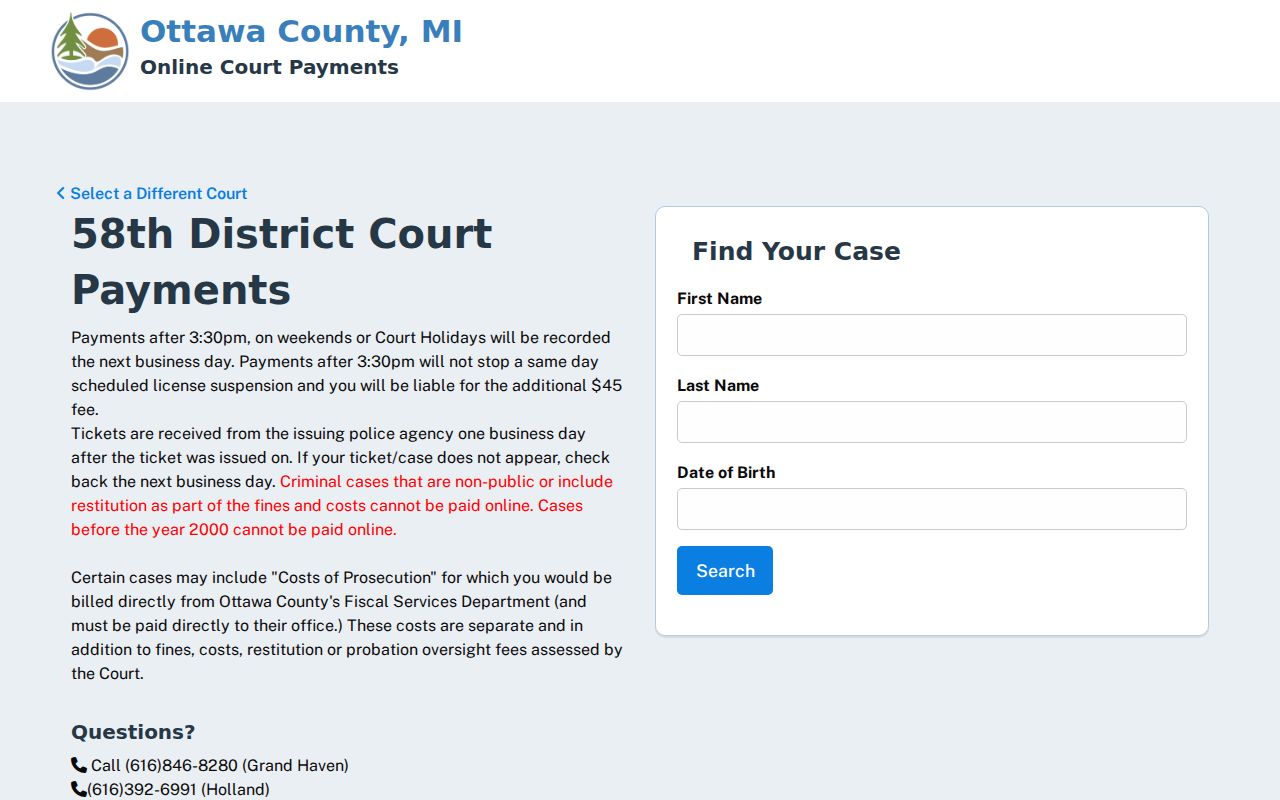
Online status is a timing aid, nothing more. When a record has not posted yet, the citation and the responsible District Court location still give you the answer.
How to Look Up a Traffic Ticket
For a civil infraction, begin with the Ottawa civil-infraction ticket search. It takes a last or business name, ticket year, and ticket number. The page also points to license-plate information. Need a wider view of a District Court case? The MiCOURT D58 search is the public case-search route. It can confirm the court, case number, and public status. It also shows any visible activity on the docket.
- Read the citation for the issuing location, ticket year, ticket number, and any court-date or response information.
- Enter the name, ticket year, and ticket number in the civil-infraction search when those fields match the citation.
- Use MiCOURT's 58th District route to search a public case by the strongest available case or party information.
- For a missing ticket or a case-specific question, call or email the District Court location named on the ticket, or visit its counter.
- Use the court's returned information and the citation together when confirming the case number, court date, response route, or amount shown.
Each location has its own contact. Grand Haven: (616) 846-8280 and ghtraffic@miottawa.org. Holland: (616) 392-6991 and holtraffic@miottawa.org. Hudsonville: (616) 662-3100 and hudtraffic@miottawa.org. The official locations page lists counter hours and addresses. Calling gets you information, but a phone call never counts as a hearing appearance.
Ottawa Traffic Ticket Search Fields
The civil-infraction form breaks a ticket into parts. It does not ask for one made-up combined number. Type the characters exactly as printed on the citation. Leave a required field blank and you will get a missing-field error. The search needs a name, ticket, or plate entry. Business-name fields mean the form also works for a citation issued to a company instead of a person.
| Field | How the official ticket search uses it |
|---|---|
| Last or business name | Identifies the person or organization named on the ticket. |
| Ticket year | The two-digit year portion printed with the ticket information. |
| Ticket number | The separate four-to-six-digit ticket number. |
| License plate | Referenced on the page as an alternate identifying detail where applicable. |
Finding Your Traffic Court Date
Your citation comes first for a response date or appearance information. Once a case shows publicly, MiCOURT may display a next-hearing field. The District Court also posts online public-docket schedules. Those schedules offer judge and magistrate views. Remember what a calendar is: a planning display. If dates conflict, the current court notice, the latest court-entered setting, and a direct confirmation from the assigned location control.
| Ticket number | Use the citation's two-digit ticket year plus its separate four-to-six-digit ticket number, such as YY + NNNN to NNNNNN, without making up a case number. |
|---|---|
| Court | 58th District Court and the location printed on the citation or case record. |
| Date and time | The citation's response information, a current notice, or the latest public case setting. |
| Room or schedule | A public schedule can show room, judge or magistrate, and location assignment. |
| Status | Visible case activity, a payment entry, hearing information, or a disposition, where the court displays it. |
Ottawa Traffic Docket Changes
A traffic docket can still show an old setting. A newer one may already have been entered. So treat the most recent court-entered setting as the word that counts. A direct current notice works the same way. The public calendar organizes matters by party name, time, room, and case number. The Ottawa schedule page links separate judge and magistrate views. Those displays help you find a matter, yet they may not capture a changed notice. Continuances and resets are court-controlled. Ottawa publishes no single universal traffic reset form or deadline. Contact the location assigned to the case. Keep any new notice. Ignore an older PDF or a date you remember from a prior calendar. The same caution applies during weather or holiday closures.
Paying or Contesting a Ticket
A civil infraction gives you two paths. Pay it or fight it. Ottawa says civil infractions should be paid within 30 days. Otherwise the court may add costs and require an appearance. On the contest side, the court offers an informal hearing before a magistrate and a formal hearing before a District judge. Let the citation and current court instructions guide your choice. An online payment page is not the only route.
| Pay through the citation process | Ask for a hearing |
|---|---|
| Use the court's payment route for the civil infraction shown on the citation. | Choose an informal hearing before a magistrate or a formal hearing before a District judge. |
| Ottawa says civil infractions should be paid within 30 days. | A formal-hearing request should be made at least 10 days before the citation date when a date is specified, subject to the current rule and notice. |
| Online payment adds a technology fee and has timing notices. | The civil-infraction procedure permits appearances in the ways allowed by the rule and court instructions. |
Default and timing alert: MCR 4.101 materials explain that a civil-infraction default can have added consequences. A motion to set aside a default generally has a 14-day window, with the grounds and requirements controlled by the rule. Use the citation, clerk, and current rule rather than calculating an individual deadline from a general description.
Ottawa Civil Traffic Cases
Most Ottawa traffic tickets handled through the county's online payment and search tools are civil infractions. The court docket for one of these cases can list the violation. It also lists the citation details, the setting, payments, and the disposition. A criminal traffic charge works differently. It may have started at the same traffic stop. But it produces a criminal case record with its own process. Check the citation's classification and the case type on the court record. Those labels tell you which track you are on. This split also explains why a docket search in one portal misses some matters. The payment tool excludes nonpublic cases, restitution, and criminal cases from before 2000. That limit does not mean the court has no record. Ask the right District Court clerk. That clerk can confirm the correct route for the case lookup.
Court Traffic Record vs Driver Record
Two offices keep two different files. The 58th District Court clerk holds the court traffic record. It covers the citation, the case events, the hearing, the payment route, and the disposition. The Michigan Department of State keeps the state driver file. Neither one substitutes for the other. A District Court case search will not show what the state file shows. The state file will not replace the court docket.
| Record | Custodian | Scope |
|---|---|---|
| Court traffic record | 58th District Court clerk | Citation case, court events, hearing information, orders, and disposition. |
| State driver file | Michigan Department of State | Separate state-held licensing record, distinct from the court's case file. |
The Michigan Department of State is the official state source for licensing information. Its site covers driver and license matters, a job wholly separate from the Ottawa clerk's court-record work.

Go to the court clerk for anything tied to the citation case. That means the docket, a court date, or a copy from the court file.
Ottawa Traffic Hearing Choices
Ottawa's traffic system offers two kinds of civil-infraction hearings. An informal hearing goes before a magistrate. A formal hearing goes before a District judge instead. Under Michigan's traffic benchbook, a request for a formal hearing should come at least 10 days before the date stated on the citation, subject to the current rule and notice. The benchbook adds a caution worth knowing. A phone call can get you a date, but it does not count as an appearance. The citation and the court's instructions control what counts, whether that is appearing in person, by video, through a representative, or by mail.
Fees and Copies
Confirm any traffic amount or copy requirement with the 58th District location that issued the ticket. Ottawa's traffic materials state several current fee facts. Even so, treat the online payment page as a tool, not a fixed fee schedule. Civil-infraction fines vary by violation. Commercial and registration rules can differ too. A quick call to the clerk saves a surprise.
| Item | Current Ottawa guidance |
|---|---|
| Online civil-infraction payment | A technology fee is added; the payment path shows the current total. |
| Late payment notice | A late payment may not prevent a same-day suspension and may leave a $45 fee. |
| 58th District copy or certification | Contact the District Court location that holds the traffic case for its current requirements and amount. |
| Representative traffic fine table | Ottawa's published amounts are a snapshot and can change. |
Ottawa Ticket Payment Timing
Timing matters with online payments. Anything submitted after 3:30 p.m., on a weekend, or on a holiday posts the next business day. That gap can hurt when a deadline is near. Ottawa warns that a late online payment may not stop a same-day suspension. It may still leave a $45 fee, even though you submitted the payment. When the cutoff is close, check the court named on the ticket, the payment screen, and the District Court clerk. The court's own payment notice governs how a submission gets posted. One last docket note. The time a payment posts and the case's final disposition are separate docket events. One does not tell you the other.
Ottawa Traffic City Routing
A city officer can write a local ordinance ticket. But Ottawa County still funnels county traffic matters into one place. That place is the District Court. Holland's payment guidance points non-parking traffic citations to the 58th District Court. Ferrysburg describes civil infractions being forwarded there when they go unpaid. These are routing examples, not proof that every municipal notice takes the same path. Holland's official fees-and-fines page is where the 58th District Court direction appears for non-parking citations. Your citation still governs. Read it for the named court and the steps you must take to respond.
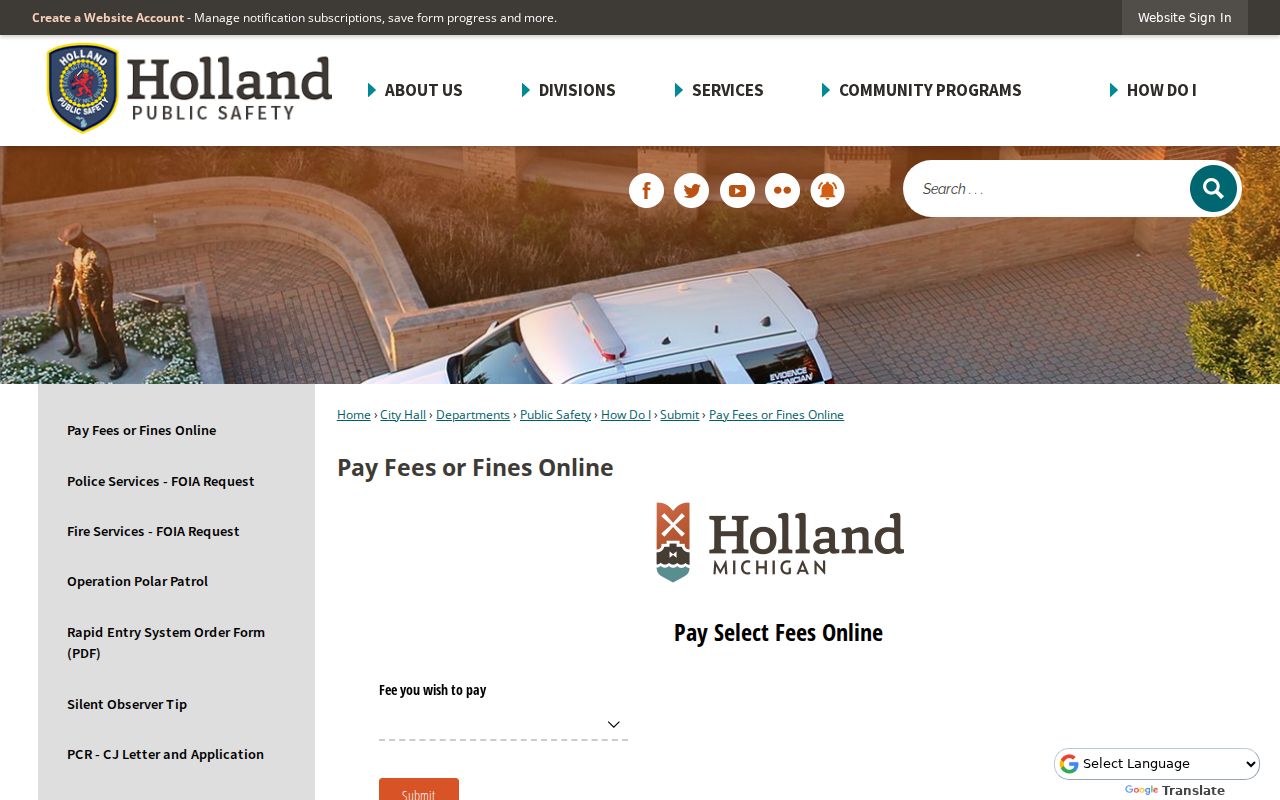
Don't assume a city traffic docket just because a city name appears. Check which court the citation names first, then search, pay, or request a hearing there.